
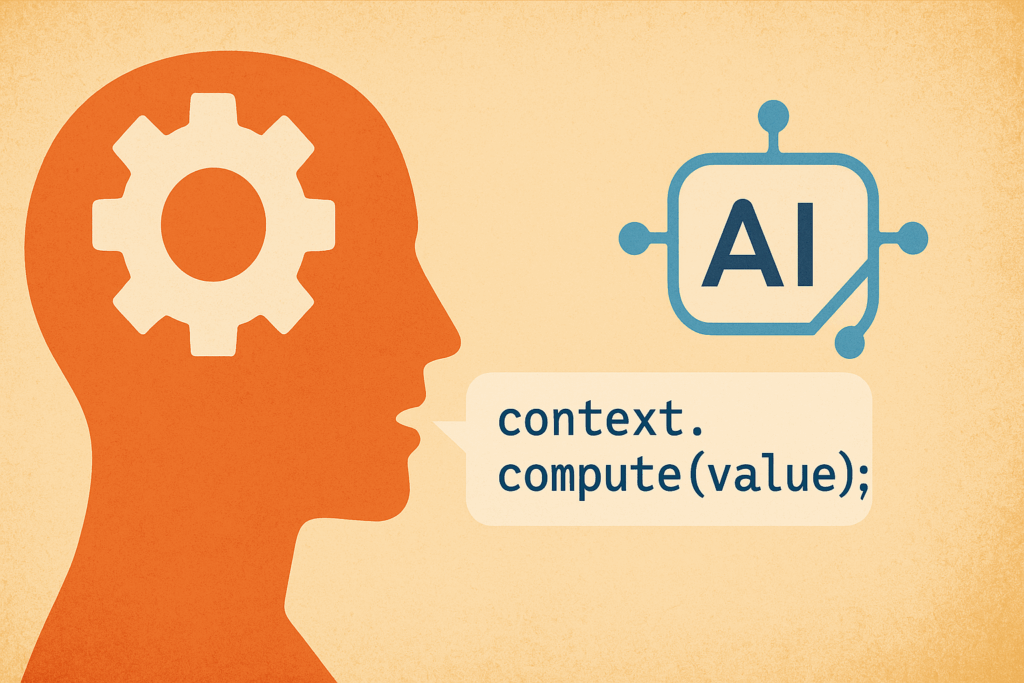
Working with AI has taught me something I never expected about programming: that clarity isn’t just logical — it’s emotional.
When I’m distracted or impatient, the quality of my code, my prompts, and my thinking all decline.
When I slow down, breathe, and connect to the intention behind what I’m building,
AI responds in kind.
It’s as if mindfulness itself is a form of architecture — a way of holding complexity with care.
1. Awareness as a Development Practice
Mindfulness in development isn’t just about mental health.
It’s about accuracy.
When we’re mindful, we catch subtle inconsistencies and hold the system in our heads with less friction.
AI amplifies this effect — it magnifies the clarity we bring to it.
2. Prompting as Presence
Every prompt is an act of attention.
When we rush a prompt, we get noise.
When we compose one mindfully — describing context, objective, and audience —
the AI returns coherence and depth.
Prompting well isn’t about clever phrasing.
It’s about conscious communication.
3. The Mirror Effect
AI mirrors our thought patterns.
If we’re scattered, it’s scattered.
If we’re intentional, it’s intentional.
This mirror makes mindfulness a technical skill —
not a luxury, but a foundation for effective collaboration.
4. Toward Conscious Collaboration
The next era of software development won’t be driven by speed.
It will be driven by quality of understanding.
Mindfulness allows developers to think not just about what they’re building,
but about how every interaction shapes the intelligence that learns from them.
This isn’t mysticism. It’s mastery.
Closing Reflection
When I work with Claude or ChatGPT in a state of quiet attention,
I feel the same clarity I get from pair programming with a brilliant human partner.
Ideas flow. Misunderstandings dissolve.
What emerges feels effortless — yet deeply intentional.
Mindfulness matters because it turns collaboration into communion.
And that, more than any algorithm, is what will define the future of creation.

